US Printer Import Costs for Construction Hoarding & Site Signs
October 28, 2026
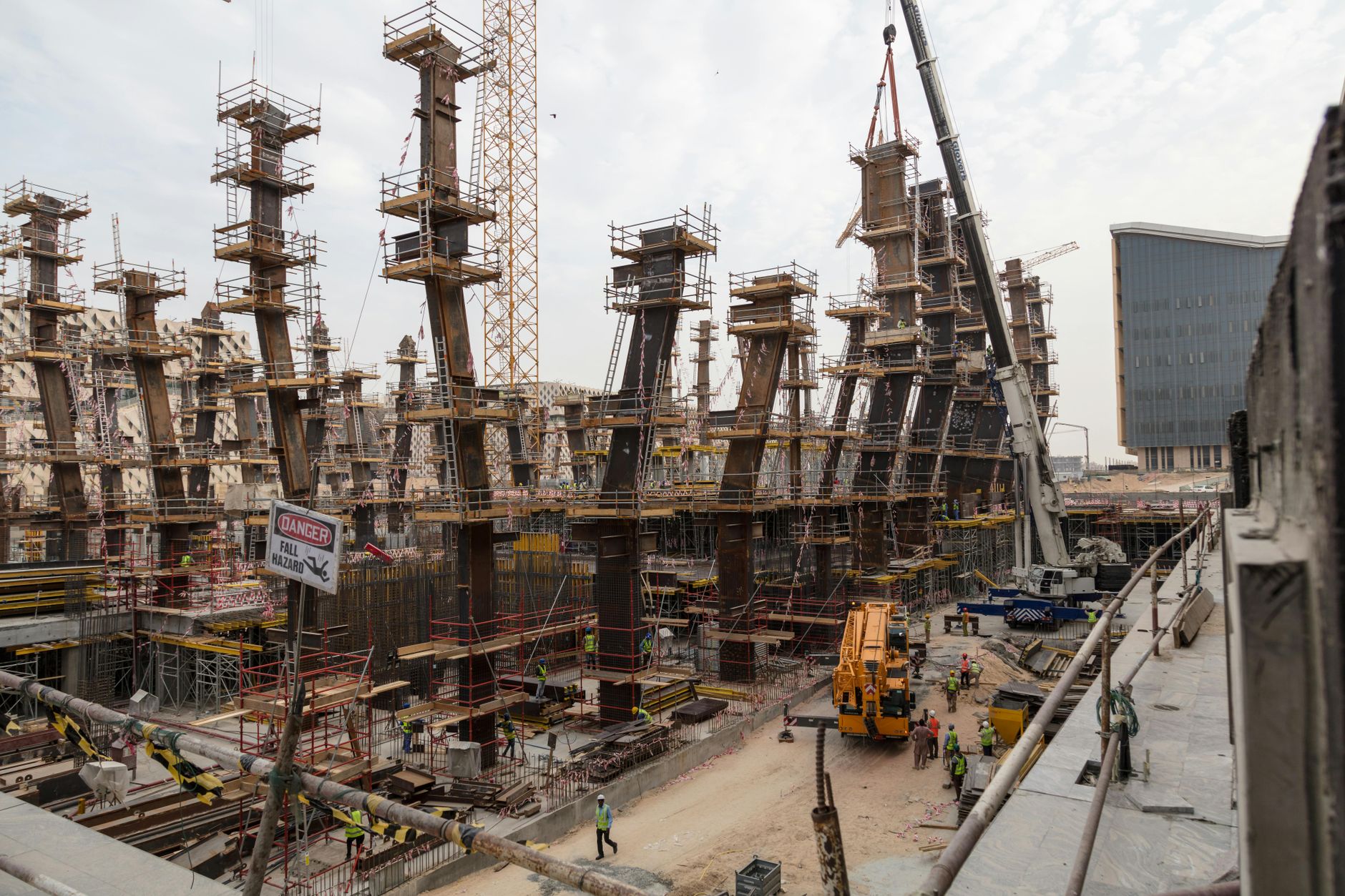
Construction hoarding and site signs from a US printer: the import costs on Canadian projects
Vinyl banners and plastic site signs are not on Canada’s current US surtax list, but an order from a US printer is still a commercial import. Canadian buyers must account for currency conversion, freight, GST or HST, customs clearance, brokerage fees and possible border delays before comparing prices.
A quote that looks lower in US dollars may not stay lower after it reaches the job site. For construction hoarding and other large format printing, the practical comparison is the total landed and installed cost, not the supplier’s unit price. These import costs can affect both the project budget and the construction schedule.
What the current surtax rules mean for site signage
As of October 2026, vinyl banners and plastic site signs are not subject to Canada’s current surtax on listed US-origin goods. Their exclusion does not eliminate the customs entry, tax, brokerage and logistics work associated with cross-border printing.
Since September 8, 2026, Canada has applied surtax rates of 15%, 25% or 50% of the value for duty to listed goods originating in the United States (United States Surtax Order (2026)). These tariffs should not be added to vinyl banners or plastic site signs when estimating their cost because those products are not on the list.
Whether a listed product is affected depends on its tariff classification and origin under CUSMA marking rules, not simply on where the seller is located. The surtax can also apply to listed US-origin goods shipped through another country (CBSA Customs Notice 26-23).
News about tariffs on products such as softwood lumber does not mean the same tariff treatment applies to printed graphics. Tariffs and customs duties are determined by the classification, origin and applicable trade measure for each imported product.
That distinction matters when a construction hoarding order includes more than printed vinyl or plastic panels. Frames, stands, hardware, lighting components and other products may require separate classifications. Buyers importing directly should confirm every product classification with a customs broker rather than assuming the entire shipment will receive the same treatment.
How to calculate the real landed cost
The real cost of imported construction signage is the invoice value after currency conversion, plus transportation, tax and every charge required to clear and move the shipment. Installation, replacements and schedule-related expenses should then be added to determine the effect on total construction costs.
A useful purchasing formula is:
Landed cost = invoice value in Canadian dollars + freight and insurance + applicable tariffs or customs duties + GST/HST + brokerage and carrier fees + storage or inspection charges
For project budgeting, expand the calculation to include:
- Foreign-exchange conversion and card or bank charges
- Packaging, crating or pallet fees
- Cross-border freight and fuel surcharges
- Customs brokerage or courier clearance
- Carrier disbursement fees
- Applicable tariffs or customs duties on separately classified goods
- GST or applicable HST
- Storage caused by delayed clearance or delivery
- Job-site handling and installation
- Replacement graphics or panels
- Rush freight if the construction schedule changes
The US price is commonly quoted in US dollars, so the final Canadian-dollar amount can move between approval, payment and card settlement. Procurement teams should record which exchange rate is being used and whether the supplier, bank or payment platform adds a conversion margin.
Brokerage fees also vary by carrier and service level. A courier’s transportation quote may not include customs brokerage, disbursement charges or additional entry lines for shipments containing several types of goods.
For comparison, place the imported landed estimate beside published construction site & hoarding graphics pricing, then make sure both figures cover equivalent materials, finishing, delivery and installation scope. This gives the project budget a more realistic allowance for import costs.
Why GST can make the border invoice look larger
GST or HST remains relevant even when a product is not subject to the surtax. The importer may have to pay tax at importation or through the carrier, depending on the transaction structure and province.
GST is calculated after any applicable surtax has been added. In the CBSA’s example for a listed product, a $150 item at a 25% rate incurs $37.50 in surtax, with GST calculated on $187.50, producing $46.88 in combined surtax and GST (CBSA Customs Notice 26-23).
At the 50% rate, the same $150 example produces $75 in surtax and $11.25 in GST, for a combined amount of $86.25 (CBSA Customs Notice 26-23). Again, these tariff examples do not apply to vinyl banners or plastic site signs. They illustrate why classification matters when a larger order contains other goods.
A business may be able to recover eligible GST or HST through its normal tax filings, but that does not remove the cash-flow requirement when the shipment arrives. Recoverable tax, non-recoverable import costs and customs duties should be shown separately in the project budget. Buyers should confirm the tax treatment with their accounting team.
Specifications that affect price and customs clearance
A construction-sign order should describe each product by material, construction and intended use. A vague invoice description such as “signage” can create questions at the border and make it harder for the broker to prepare the customs entry.
Clear specifications are particularly important for large format printing because one order may combine flexible graphics, rigid panels and mounting hardware. Those components can have different classifications and supply chain requirements.
Vinyl banner
Vinyl banners suit fence lines, temporary notices, project branding and sponsor identification. Buyers should specify finished dimensions, single-sided or double-sided printing, hemming, reinforced edges, grommet spacing, pole pockets and any wind-relief requirements.
Mesh banner
Mesh allows more air to pass through than solid banner material, which can make it appropriate for fencing and exposed installations. Image density, viewing distance and local wind conditions should be considered during artwork and material selection.
Printed plastic site sign
Rigid plastic signs are commonly used for directional messages, contractor identification, safety information and temporary project notices. The quote should identify the plastic type, thickness, print method, finishing, mounting holes and whether stakes, posts or other hardware are included.
Hoarding graphics
Construction hoarding can use adhesive graphics applied to prepared panels, rigid printed sheets or banner systems attached to temporary structures. Surface condition, panel seams, expected display duration, outdoor exposure and removal requirements influence the appropriate specification.
Accent Impression provides construction site & hoarding graphics for Canadian projects, including printed panels, banners and coordinated site-sign programs.
Documents the Canadian importer should expect
A commercial shipment requires clear documentation identifying what is being imported, its value and the parties responsible for the transaction. Missing or inconsistent details can delay clearance even when no surtax or other tariffs apply.
The commercial invoice should normally include:
- Accurate product descriptions
- Material and construction details
- Quantity and unit values
- Total transaction value
- Transaction currency
- Country of origin
- Seller and purchaser information
- Importer-of-record information
- Separate identification of hardware or accessories
- Freight or insurance charges where applicable
The importer of record is responsible for the customs entry and associated amounts. Buyers should establish before production whether the Canadian purchaser, US seller or another party will act in that role.
If the supplier says that duties or taxes are “included,” procurement should ask exactly what that means. The answer should distinguish the product price from transportation, tax, customs duties, brokerage fees, disbursement and delivery to the final construction site.
The delivery terms should also be consistent across the quote, invoice and shipping documents. Unclear responsibility for border charges can disrupt the supply chain and leave the buyer with import costs that were not included in the original comparison.
Border delays can cost more than brokerage
The most expensive import problem is often not a clearance fee but a missed installation window. Hoarding graphics are commonly tied to fencing completion, public announcements, tenant openings, inspections or scheduled construction milestones.
A shipment may be held while documentation, classification, origin or valuation is reviewed. Weather, freight capacity and job-site receiving restrictions can add further uncertainty after clearance. Cross-border printing therefore introduces supply chain dependencies that may not be visible in the initial unit price.
Schedule risk can produce indirect costs such as:
- Installers arriving before the graphics
- Temporary blank hoarding or substitute notices
- Additional site visits
- Storage when signs arrive before the site is ready
- Rush production of corrected or replacement panels
- Split shipments to meet staged construction dates
- Rebooking lifting equipment or access crews
These expenses may be small relative to total construction costs, but they can eliminate the expected saving on the signage order. They can also affect public-facing deadlines for Canadian projects.
Canada’s rules affecting US-origin goods have changed several times since early 2025 and can be amended again. An order placed with a company in Canada does not depend on cross-border customs clearance or changes to the import rules.
How to compare Canadian and US quotes fairly
A fair quote comparison uses the same dimensions, substrates, finishing, quantity, delivery point and installation assumptions. Comparing one supplier’s bare print price with another supplier’s delivered project price creates a saving that exists only in the spreadsheet.
Ask both suppliers to quote against a common specification covering:
- Finished dimensions and quantities
- Substrate type and thickness
- Indoor or outdoor application
- Expected display period
- Finishing, including hems, grommets or mounting holes
- Hardware and structural components
- Packaging and labelling by site or installation zone
- Delivery to one location or multiple sites
- Installation responsibilities
- Replacement and artwork-correction procedures
For a US quote, add a separate import-cost worksheet showing the exchange rate, freight, brokerage fees, taxes, possible customs duties and contingency allowance. This prevents uncertain border charges from being hidden inside a general project-budget reserve.
For multi-phase developments, also compare the cost of version control, staged releases and replacement pieces. Additional planning resources are available in more construction site & hoarding graphics guides.
When a US order may still make sense
A US order may be reasonable when the product has a unique specification, when it is part of a broader international program or when the landed price remains favourable after every cost is included. The decision should be based on documented total cost and acceptable schedule risk.
Before approving the order, procurement should have written answers for four questions:
- What is the estimated Canadian-dollar landed cost?
- Who is the importer of record?
- Who pays brokerage, tax, possible tariffs and unexpected storage?
- What is the contingency if the shipment is held or arrives damaged?
If any answer is unclear, the apparent saving has not yet been demonstrated.
Frequently asked questions
These are the questions Canadian project managers and procurement teams most often need answered before ordering construction hoarding or site signs from a US printer.
Are vinyl banners from a US printer subject to the current Canadian surtax?
No. As of October 2026, vinyl banners are not on the current surtax list. They remain commercial imports and still require customs clearance, with applicable GST or HST, freight and brokerage costs.
Are plastic construction signs subject to the surtax?
No. Plastic site signs are not on the current list. However, frames, mounting systems, hardware or other goods packed with the signs may need separate classification, so direct importers should confirm the shipment details with a customs broker.
Does “no surtax” mean there will be no border invoice?
No. A carrier or broker may collect GST or HST, brokerage, clearance, disbursement, storage or other transportation-related charges. Separate goods included with the signs could also be subject to tariffs or customs duties depending on their classification and origin.
Who should be the importer of record?
That depends on the sales and delivery arrangement. The parties should identify the importer of record in writing before production because that party is responsible for the customs entry and associated amounts.
What information should appear on the commercial invoice?
The invoice should accurately describe the material and construction, list quantities and values, state the currency and country of origin, and identify the purchaser, seller and importer of record. Hardware and accessories should be described separately where appropriate.
What is the best way to compare a US quote with a Canadian quote?
Convert the US invoice to Canadian dollars, then add freight, tax, brokerage, clearance, potential storage, job-site delivery and installation. Also assign a realistic cost to schedule risk, replacements and extra site visits before comparing totals.
Request a quote
Rather leave the border out of it? Our Montreal team quotes in Canadian dollars, on one Canadian invoice.